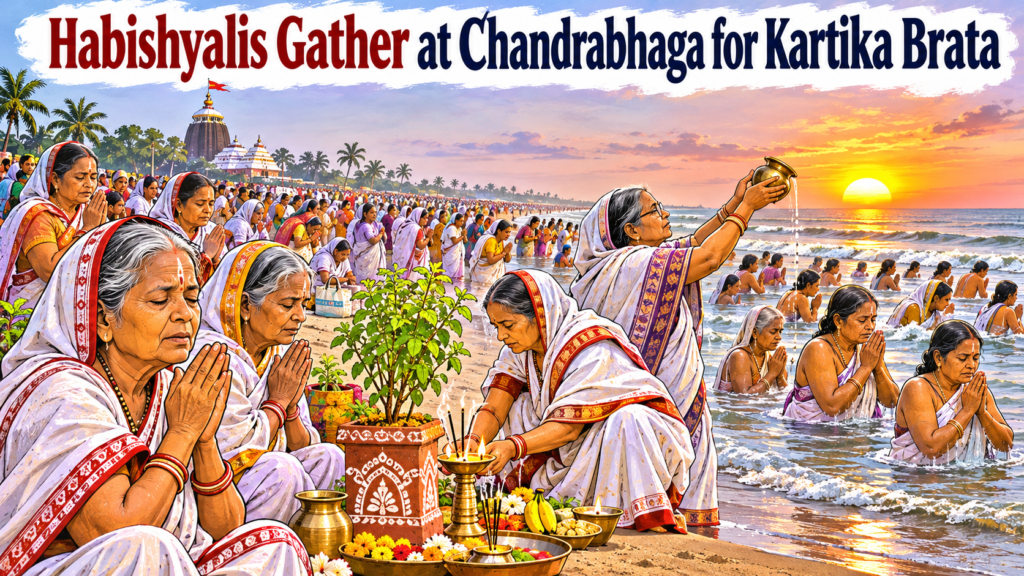

Puri’s Chandrabhaga beach is witnessing a large gathering of Habishyalis as hundreds of women from different parts of Odisha arrive to observe the sacred Kartika Brata. The women have come together to follow traditional religious practices throughout the holy month, maintaining a daily routine of prayers, worship and spiritual activities.
The annual observance brings together devotees who dedicate the month to religious discipline and devotion. For many Habishyalis, Kartika Brata is an important period of spiritual practice, with each day beginning early in the morning with sacred rituals.
Early Morning Holy Dips Mark the Beginning of Daily Rituals
The day for the Habishyalis begins before sunrise with a holy dip at Chandrabhaga. The women gather near the water to perform the traditional bathing ritual, which holds religious significance during the month of Kartika.
Following the morning dip, they offer prayers to the Sun God through Surya Puja. The ritual forms an important part of their daily observance, reflecting their devotion and commitment to traditional practices.
The morning activities continue with Tulasi Puja, during which the devotees worship the sacred Tulasi plant. These rituals are performed as part of their regular spiritual routine throughout Kartika Brata.
Worship of Radha-Damodara and Kartika Purana Recitation
After completing the morning rituals, the Habishyalis participate in the worship of Radha-Damodara. The daily prayers and religious observances are central to their month-long spiritual commitment.
Another important part of the routine is the recitation of the Kartika Purana. Devotees listen to and recite the religious text as part of their observance, following the traditions associated with the sacred month.
The combination of holy bathing, prayers and scriptural recitation gives the daily activities a structured religious character. The women continue these practices with devotion throughout the Kartika period.
Chandrabhaga Becomes a Gathering Point for Devotees
The presence of hundreds of Habishyalis from different parts of Odisha has made Chandrabhaga an important gathering point for devotees observing Kartika Brata.
Their participation reflects the continued significance of traditional religious observances in Odisha. For the women, the month-long practice offers an opportunity to focus on prayer, worship and spiritual discipline.
As the Kartika Brata continues, Chandrabhaga remains a centre of religious activity, with Habishyalis following their daily rituals and preserving the traditions associated with the holy month.
The gathering of Habishyalis at Chandrabhaga highlights the enduring importance of Kartika Brata in Odisha’s religious traditions, bringing together women from different regions to observe the sacred month through devotion and daily worship.