
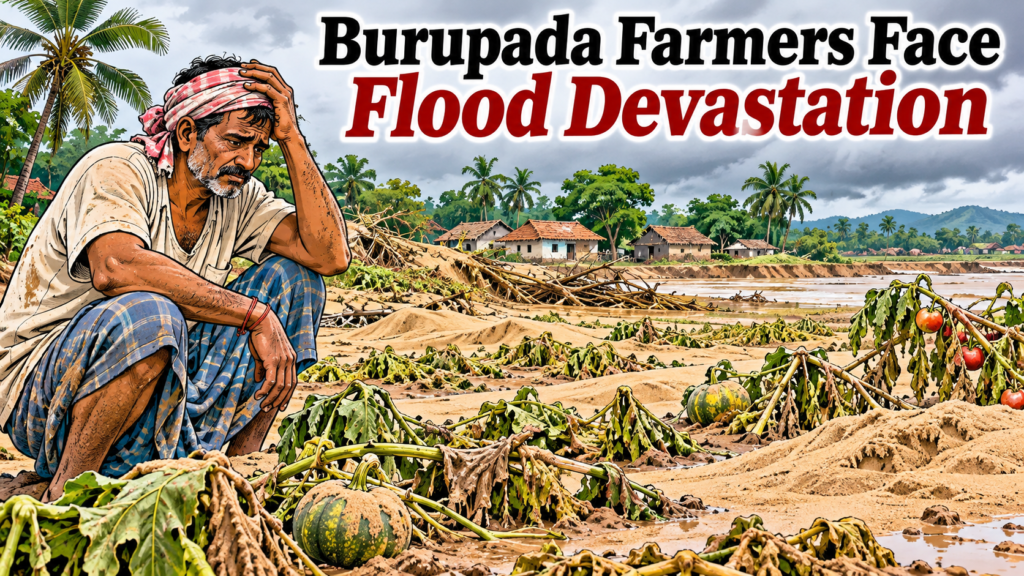

Ganjam, Odisha: Once known for its fertile farmland and abundant vegetable production, Burupada village in Ganjam district is now facing a serious agricultural crisis following devastating floods. Large stretches of farmland have been covered with layers of sand, mud, concrete and other debris, leaving farmers struggling to recover from the destruction.
Located in Hinjilicut block, Burupada has long been recognised as an important vegetable-growing area. Agriculture has been a major source of livelihood for local families, with farmers depending on seasonal cultivation to support their households. However, the recent floods have severely disrupted agricultural activities across the region.
Flood Damage Leaves Agricultural Land Buried
The floodwaters have washed away standing crops and deposited thick layers of sand and debris across agricultural fields. Land that was previously used for growing vegetables has now become difficult to cultivate.
For many farmers, the damage extends beyond the loss of a single harvest. The deposited sand and debris have affected the usability of farmland, creating additional challenges for those hoping to restart cultivation.
The situation has left farmers uncertain about when they will be able to return to their fields. Clearing the accumulated deposits and preparing the land for another cultivation cycle could require considerable time, labour and financial resources.
Farmers Struggle With Mounting Financial Losses
The destruction has placed considerable financial pressure on farming families. Farmers invest money in seeds, fertilisers, irrigation facilities, labour and other agricultural requirements before expecting returns from their harvest.
With standing crops destroyed and farmland affected, many cultivators have lost the income they were counting on. Those who borrowed money for agricultural activities now face additional difficulties in meeting their financial commitments.
The crisis has also raised concerns about the future of vegetable cultivation in Burupada. Without sufficient financial assistance and support to restore damaged farmland, farmers may find it difficult to resume their normal agricultural activities.
Central Team Inspects Flood-Affected Areas in Ganjam
The agricultural damage in Ganjam has also drawn the attention of a Central assessment team.
An eight-member Inter-Ministerial Central Team visited several flood-affected areas of Ganjam district on November 4 to assess the destruction caused by Cyclone Arnab and subsequent flooding. The team inspected Burupada in Hinjilicut block, along with other affected locations.
During the visit, officials examined damage to agricultural and horticultural crops, farmland, irrigation facilities, roads, bridges and electricity infrastructure. The team also assessed sand deposits across agricultural fields and interacted with affected residents.
The findings of the inspection are expected to contribute to the government’s assessment of the damage and consideration of assistance for affected areas.
Farmers Await Support to Rebuild Their Livelihoods
For Burupada’s farming community, the immediate challenge is not simply recovering from crop losses but restoring agricultural land and finding the financial means to begin cultivation again.
Farmers need support to clear sand and debris, restore affected farmland and arrange the resources required for the next agricultural season. Timely assessment of losses and appropriate assistance will be important in helping affected families recover.
The devastation in Burupada highlights how severe flooding can affect not only standing crops but also the long-term agricultural potential of a region. For a village that has depended on vegetable cultivation for its livelihood, rebuilding its agricultural economy remains a major challenge.