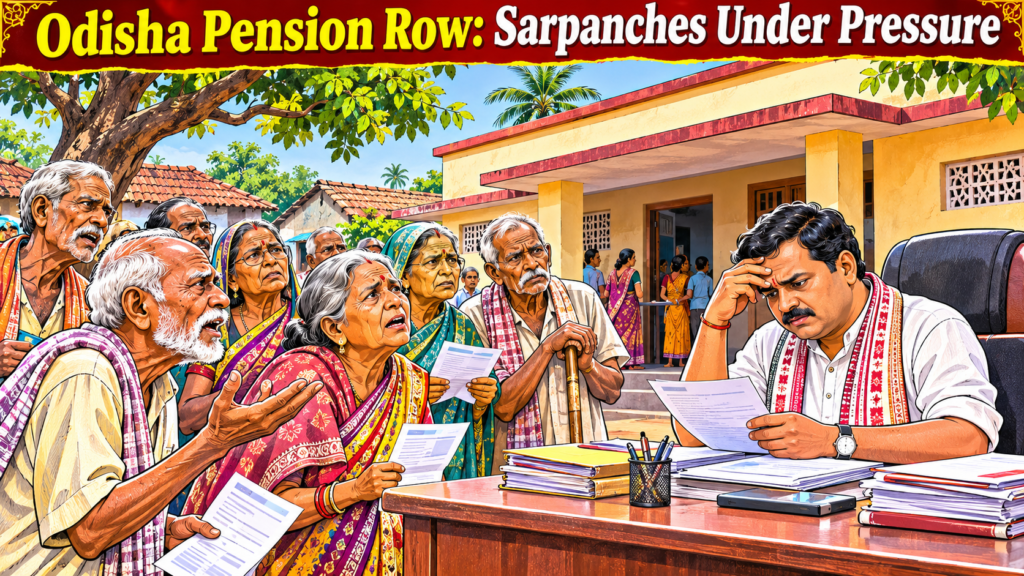

With Panchayat elections approaching in Odisha, pension distribution has become a growing concern at the grassroots level. Beneficiaries facing difficulties with their pension payments are reportedly approaching their respective Sarpanches, seeking clarity and assistance over the revised payment arrangements.
The situation has put village-level representatives under pressure, as many beneficiaries want a simpler process that allows them to receive their full pension amount directly at the Panchayat level.
The concerns come amid changes announced by the Odisha government to streamline social security pension distribution and improve access to welfare benefits.
Why the New Pension Arrangement Has Raised Concerns
The Odisha government recently introduced changes to pension administration under the National Social Assistance Programme (NSAP). Under the revised arrangement, the state’s share of the pension will be distributed in cash, while the Centre’s contribution will be transferred directly to beneficiaries’ bank accounts after they receive their dues.
The announcement was made by Chief Minister Mohan Charan Majhi on November 10, 2026. The revised arrangement is intended to streamline pension payments, but the change in the payment process has become a concern for beneficiaries seeking a straightforward way to collect their money. OrissaPOST+1
Beneficiaries are demanding that the entire pension amount be made available through their respective Gram Panchayats. They believe a simplified distribution arrangement would make it easier to access their benefits without having to deal with multiple payment channels.
Government Announces Changes to Pension Distribution
The state government’s announcement also included measures to expand pension coverage under the Madhu Babu Pension Yojana (MBPY).
According to the Chief Minister’s official announcement, 5,05,817 additional beneficiaries have been included under the scheme, taking the total coverage to 41,80,825. The government has allocated an additional ₹625 crore annually to support the expansion.
The government has also launched the Unified Pension Management Portal (UPMP) to simplify applications and improve pension administration. Eligible applicants can apply online or seek assistance through Common Service Centres and Block Development Officer offices.
Under the new arrangements, eligible beneficiaries will receive pension payments from the month following approval of their applications. People who reach 80 years of age will automatically become eligible for a monthly pension of ₹3,500 without submitting a fresh application.
Beneficiaries Seek Easier Access at Panchayat Level
Despite the government’s efforts to improve the system, the payment process remains a major concern for beneficiaries seeking convenient access to their pensions.
The demand for full pension payments at the Panchayat level reflects the difficulties some beneficiaries face when navigating different payment arrangements. For elderly people and those who depend on monthly pension assistance, a straightforward collection process is particularly important.
Under the announced schedule, newly enrolled MBPY beneficiaries are to receive their October and November payments together. The government has also designated Panchayat and Municipality offices as collection points for beneficiaries who cannot collect their payments during the scheduled distribution programmes.
As these changes take effect, beneficiaries will be looking for clear information about where and how they can collect their pension payments.
The growing concerns have also brought Sarpanches into the discussion, with beneficiaries approaching their local representatives for help. The key demand remains a simpler and more accessible Odisha pension distribution system that ensures eligible people receive their full benefits without unnecessary difficulties.