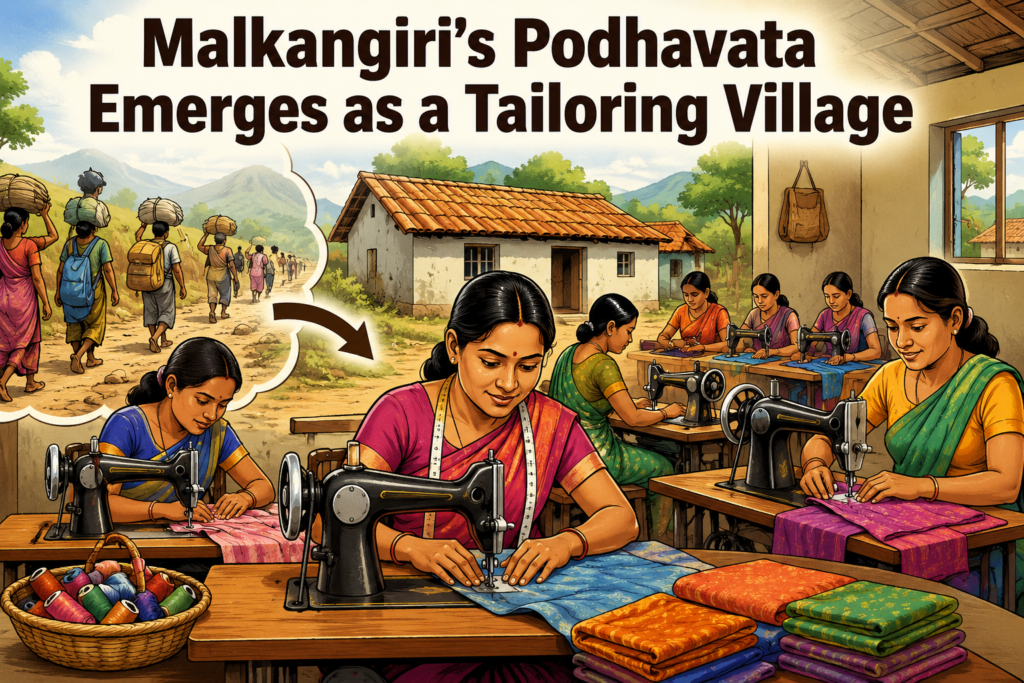

MALKANGIRI: A quiet change is taking place in Podhavata village of Malkangiri, where women who once depended on daily-wage work outside the state are increasingly finding a livelihood within their own homes.
The village is now known as a “tailoring village”, with sewing machines becoming a familiar sight across households. More than 30 women are earning through tailoring, creating a local source of income without having to leave their families behind.
For these women, the shift represents more than a new occupation. It is a move towards building livelihoods within the village itself.
From Migration to Home-Based Livelihoods
For years, the lack of local employment opportunities pushed women from Podhavata to migrate to other states in search of daily-wage work. Such migration meant leaving behind their homes and families in pursuit of income.
Tailoring has opened a different possibility.
With sewing machines available in almost every household, women can now take up work from home and earn locally. The change has helped create an income-generating activity that can be managed within the village.
More than 30 women are currently engaged in tailoring, according to the information available about the village.
Sewing Machines Become a Source of Income
The transformation of Podhavata is closely linked to the growing presence of sewing machines in local homes.
Instead of travelling elsewhere for employment, women can use their tailoring skills from their own surroundings. This allows work and family responsibilities to remain closer together.
The development also shows how a skill-based livelihood can create opportunities at the village level when employment options outside the area are limited.
For the women involved, tailoring is not simply a household activity. It has become a means of earning and contributing to their families’ livelihoods.
Podhavata’s Changing Story
The emergence of Podhavata as a tailoring village reflects a broader rural livelihood story: employment does not always require migration when suitable skills and opportunities can be developed locally.
The women’s move from daily-wage migration to home-based tailoring demonstrates how an existing skill can become an income source when there is a practical way to use it.
It also gives the village a new identity built around women’s work and local enterprise.
The story of Podhavata highlights how rural women can create livelihoods close to home when opportunities allow them to turn their skills into sustainable work.
As more than 30 women continue to earn through tailoring, Podhavata’s journey from migration-dependent work towards a tailoring-based livelihood offers a notable example of women building economic opportunities within their own village.