
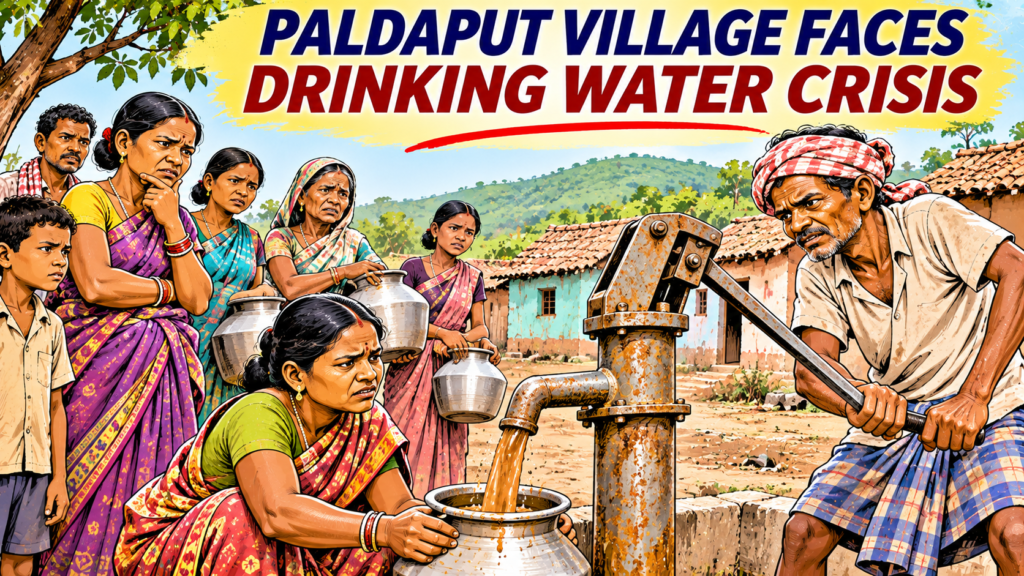

Residents of Paldaput village under Jalahangara Panchayat in Lamptaput block of Koraput district continue to struggle for access to safe drinking water. Despite several government initiatives aimed at improving rural water supply, villagers say their basic drinking water needs remain unmet.
The situation has become increasingly concerning as three hamlets in the village depend on just two hand pumps for their daily water requirements. With such limited sources available, residents face difficulties accessing clean water for drinking and other household needs.
Two Hand Pumps Serve Three Hamlets
The shortage of drinking water sources has placed considerable pressure on the existing hand pumps. According to villagers, these two facilities are the primary sources of water for people living across the three hamlets.
However, the availability of water is not the only concern. Residents allege that both hand pumps have been supplying muddy and contaminated water for the past six months, raising serious questions about the quality and safety of the water being consumed.
For families who depend on these hand pumps every day, the situation has become a major challenge. Access to safe drinking water remains a basic necessity, and the lack of reliable alternatives has added to the difficulties faced by the villagers.
Villagers Raise Health Concerns Over Polluted Water
The condition of the water has also raised concerns about public health in the area. Villagers allege that people have fallen ill after consuming water from the affected hand pumps.
Although the reported health problems have not been independently established as waterborne illnesses, the complaints highlight the need for immediate attention to the quality of the available drinking water.
Safe drinking water is essential to prevent health risks, particularly in rural communities where households may have limited access to alternative sources. The Odisha government’s Rural Water Supply and Sanitation Department identifies water quality monitoring and the provision of safe drinking water as important parts of its rural water supply programme.
Residents Need Immediate Attention
The situation in Paldaput has raised questions about the effectiveness of drinking water facilities at the village level. While government schemes aim to improve access to safe water, residents say the ground situation in their village remains difficult.
The immediate concern is to ensure that the two hand pumps are inspected and the water is tested to determine whether it is safe for consumption. If contamination is confirmed, appropriate corrective measures and alternative drinking water arrangements will be necessary.
For the people of Paldaput, access to clean drinking water should not remain an everyday struggle. The Paldaput drinking water crisis highlights the importance of ensuring that rural water supply facilities are not only available but also functional and safe for public use.
Residents are hoping that the concerned authorities will take the complaints seriously and address the problem without further delay.