
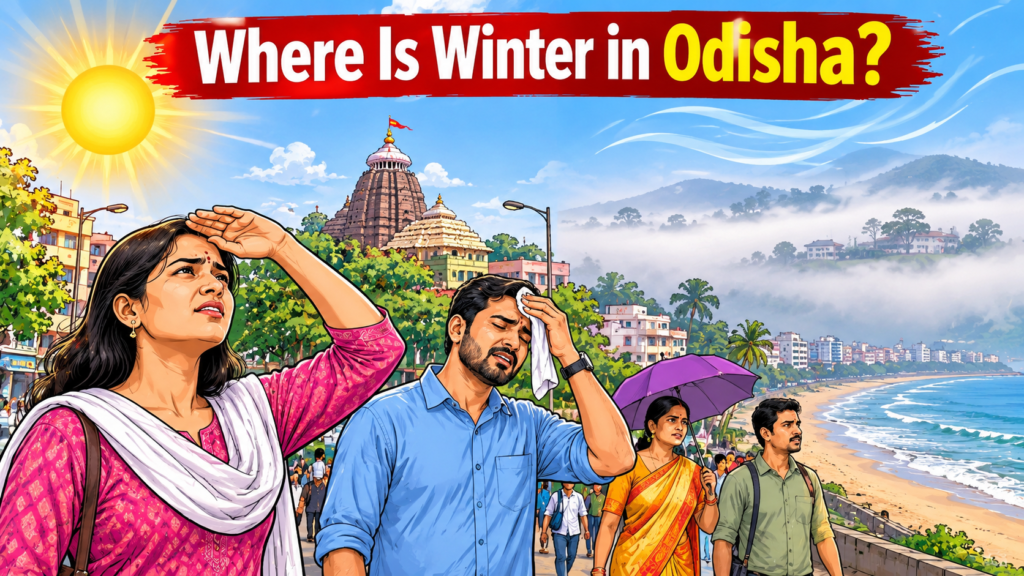

Bhubaneswar: November has begun, but winter is yet to make its presence felt across Odisha. While people usually expect temperatures to gradually decline during this month, several parts of the state are still experiencing relatively warm conditions during the daytime.
The delayed arrival of winter has become noticeable as the usual seasonal transition remains gradual. Although foggy conditions have been reported in some areas, the expected morning chill and cold winter atmosphere are yet to become prominent across the state.
The weather pattern has also drawn attention because November generally marks the beginning of cooler conditions in Odisha. However, the transition from the post-monsoon season to winter does not happen uniformly across all districts.
Why Is Winter Delayed in Odisha?
Several atmospheric and weather-related factors influence the arrival of winter in Odisha. The movement of cold and dry winds from northern India plays an important role in bringing down temperatures, particularly during the night and early morning.
However, changes in wind direction, moisture levels and atmospheric conditions can affect how quickly colder weather reaches the state. The Bay of Bengal also influences Odisha’s weather, particularly during the post-monsoon period when weather systems can bring rainfall, cloud cover and changes in temperature.
The recent influence of Cyclone Murasu and associated weather activity has also been linked to the delayed development of colder conditions. Earlier weather reports indicated that the system’s influence could affect atmospheric moisture and postpone the arrival of winter chill.
Night Temperatures May Begin to Fall
Despite the continued warmth during the daytime, colder conditions may gradually develop over the coming days. Weather reports published on November 6 indicated that minimum temperatures across Odisha could fall by around 2–4 degrees Celsius over the following three days.
Interior and hilly districts, including Kandhamal, Gajapati, Koraput, Mayurbhanj and Keonjhar, may experience comparatively colder nights. Coastal areas are also expected to witness a gradual change in nighttime temperatures.
The expected fall in minimum temperatures could bring some relief from the warm conditions that have continued into November. However, the arrival of noticeable winter weather will depend on how atmospheric conditions develop over the coming days.
Climate Change and Changing Seasonal Patterns
The changing pattern of seasonal weather has also raised questions about the influence of climate change. Rising global temperatures are affecting weather patterns in different parts of the world, and changes in seasonal conditions have become an important subject of climate research.
However, climate change cannot be identified as the direct cause of this particular delay without a detailed meteorological assessment. Local weather systems, wind circulation, rainfall and atmospheric moisture also influence the timing and intensity of winter conditions.
According to the India Meteorological Department’s extended-range forecast issued on November 5, minimum temperatures across most parts of the country were expected to remain near normal during November 5–18. The department also indicated no probability of cold-wave conditions anywhere in the country during these two weeks.
For now, Odisha residents may have to wait a little longer to experience the familiar winter chill. The coming days will provide a clearer indication of whether temperatures will decline enough to bring noticeable winter conditions across the state.